
Salkantay Trek vs Inca Trail: The Key Differences
1. Permits and Advance Booking
This is the most practical difference between the two routes and often the deciding factor for travelers.
Inca Trail: Requires an official government permit that must be purchased months in advance. During peak season (June to August), permits sell out as early as October or November of the previous year. If you are planning your trip less than 3 to 4 months ahead, there is a very real chance that all Inca Trail permits for your dates are already gone.
Salkantay Trek: Requires no advance government permit. You can book our 5-day guided Salkantay Trek days or even weeks before your departure date. The only item that requires advance booking is your Machu Picchu entrance ticket, which we handle as part of your tour package.
Verdict: If you are planning your trip well in advance and flexibility is not a concern, the Inca Trail is viable. If you are planning your trip within a few months of departure — or want the freedom to adjust your dates — the Salkantay Trek is the clear choice.
2. Cost
Inca Trail: The Classic Inca Trail costs between $700 and $1,200 USD per person depending on the operator and season. The permit alone costs approximately $250 USD per person. Regulations require all trekkers to be accompanied by a licensed guide, which adds further cost. Porter fees and agency margins make this one of the most expensive multi-day treks in South America.
Salkantay Trek: Our guided Salkantay Trek 5 days 4 nights starts from $460 USD per person, including transport, all meals, accommodation at our own hostels along the route, bilingual guide, luggage support and the Machu Picchu entrance ticket. For budget-conscious travelers, our 4-day independent Salkantay Trek offers the same hostel infrastructure and logistics from $180 USD per person without a guide.
Verdict: The Salkantay Trek offers significantly better value at every price point. The difference in cost between the two routes is typically $300 to $700 USD per person, with no meaningful difference in the quality of the final destination — both end at Machu Picchu.
3. Difficulty and Physical Demand
Inca Trail: The Inca Trail is rated moderate to challenging. The most difficult section is the ascent to Dead Woman’s Pass — Abra de Warmihuañusca — at 4,215 meters, usually tackled on Day 2. The trail involves significant stone staircase climbing with a heavy daypack.
Salkantay Trek: The Salkantay Trek is also rated moderate to challenging, but reaches a higher maximum altitude. Salkantay Pass at 4,638 meters is 423 meters higher than Dead Woman’s Pass on the Inca Trail. The descent from the pass into the cloud forest is steep and long. However, the route is more varied in terrain, alternating between high-altitude hiking and easier jungle valley sections on Days 3 and 4.
Both routes require a reasonable level of cardiovascular fitness. For either trek, we recommend spending at least 2 days in Cusco at 3,400 meters before departure to acclimatize to the altitude.
If you want to experience the Andean altitude and landscapes without committing to a multi-day trek, our Humantay Lagoon 1-day tour is an excellent way to test your body’s response at 4,221 meters before booking a longer route.
Verdict: The Salkantay Trek reaches a higher altitude. Both routes demand similar overall fitness levels. The Salkantay Trek is more diverse in terrain.
4. Scenery and Landscapes
This is where the two routes diverge most dramatically.
Inca Trail: The Inca Trail passes through cloud forest, high Andean grassland and subtropical mountain terrain. Its major landscapes are defined by the dense green forest and the dramatic Inca stonework along the path. The trail is almost entirely within the Machu Picchu Historical Sanctuary, a protected area with strict conservation rules.
Salkantay Trek: The Salkantay route covers a far greater range of ecosystems across its 5-day span. On Day 1 you hike through high Andean plateau with views of two massive glaciated peaks — Humantay at 5,900 meters and Salkantay at 6,271 meters — and visit the extraordinary turquoise waters of Humantay Lagoon at 4,221 meters. On Day 2 you cross Salkantay Pass at 4,638 meters with panoramic views of the entire Vilcabamba mountain range. Days 3 and 4 take you through lush cloud forest and coffee-growing subtropical valleys, passing waterfalls, orchids, banana plantations and hot springs before arriving at Aguas Calientes.
The sheer variety of the Salkantay landscape — from glacial high-altitude terrain to tropical jungle valley — is one of its defining qualities and the main reason it earned its place on the National Geographic list of the world’s 25 best treks.
Verdict: The Salkantay Trek wins on landscape diversity. The Inca Trail wins on the concentration of Inca archaeological sites along the route itself.
5. Archaeological Sites Along the Route
Inca Trail: The Inca Trail passes through several significant Inca archaeological sites — Runkurakay, Sayacmarca, Phuyupatamarca and the spectacular Wiñay Wayna — before arriving at the Sun Gate with its first panoramic view of Machu Picchu. For travelers primarily motivated by Inca archaeology, the trail itself is a museum.
Salkantay Trek: The Salkantay route does not pass through as many Inca sites along the trail itself, though it does include a visit to the Inca archaeological site of Llactapata on Day 4, from which you get a stunning first aerial view of Machu Picchu before descending to the valley.
However, if archaeological depth is your priority, consider combining the Salkantay route with our Salkantay Trek to Choquequirao 6 days. This route takes the same high-altitude Salkantay pass and then diverts towards Choquequirao — a massive Inca ceremonial center often described as the sister city of Machu Picchu, comparable in size but receiving only a fraction of its visitors.
Verdict: The Inca Trail is superior for on-route Inca archaeology. The Salkantay Trek can match or exceed it when combined with a Choquequirao extension.
6. Crowds and Atmosphere
Inca Trail: Despite the daily permit limit of 500 people, the Inca Trail is a busy route during peak season. Popular campsites fill with dozens of groups simultaneously. The final approach to the Sun Gate on the morning of Day 4 can involve waiting in line.
Salkantay Trek: Although the Salkantay route has grown significantly in popularity over the past decade, it remains far less crowded than the Inca Trail. Sections of the trail — particularly beyond Salkantay Pass — can feel genuinely remote. Because we own our own hostels at Soraypampa, Chaullay and Lucmabamba, our guests stay in our private facilities rather than shared campgrounds, which creates a much more intimate atmosphere. You can read more about our accommodation on the Salkantay Accommodations page.
Verdict: The Salkantay Trek offers a quieter, more intimate experience with significantly fewer crowds.
7. Accommodation
Inca Trail: All camping on the Inca Trail uses designated campsites with tents and sleeping mats provided by your operator. The standard of sleeping conditions varies significantly between operators.
Salkantay Trek: Our Salkantay packages use a combination of our own hostels and lodges along the route, offering private rooms with real beds, hot showers and WiFi at every overnight stop. This is one of the most significant practical advantages of our Salkantay packages — you end every hiking day with a hot shower and a comfortable bed rather than a tent on a shared campground.
Verdict: The Salkantay Trek with Salkantay Hostel Treks offers consistently superior accommodation at every point on the route.
What About Choquequirao? The Third Option Worth Considering
If you have more than 5 days and want the most exclusive trekking experience in Peru, Choquequirao deserves serious consideration alongside both the Salkantay and Inca Trail options.
Choquequirao is a massive Inca ceremonial center in the Apurímac canyon — comparable in size to Machu Picchu but accessible only by multi-day trek, with no road access. It receives only a few thousand visitors per year. Walking through it in near-complete solitude is an experience that Machu Picchu — with its million annual visitors — simply cannot offer.
Our Salkantay Trek to Choquequirao 6 days combines the high-altitude Salkantay pass with a full day at the Choquequirao ruins and returns to Cusco from the Cachora valley. For the ultimate Inca adventure, our Choquequirao Trek and Machu Picchu 8 days connects both major Inca sites in a single expedition — Choquequirao on Day 5 and Machu Picchu on Day 7 — making it the most complete multi-day trekking experience available in Peru.
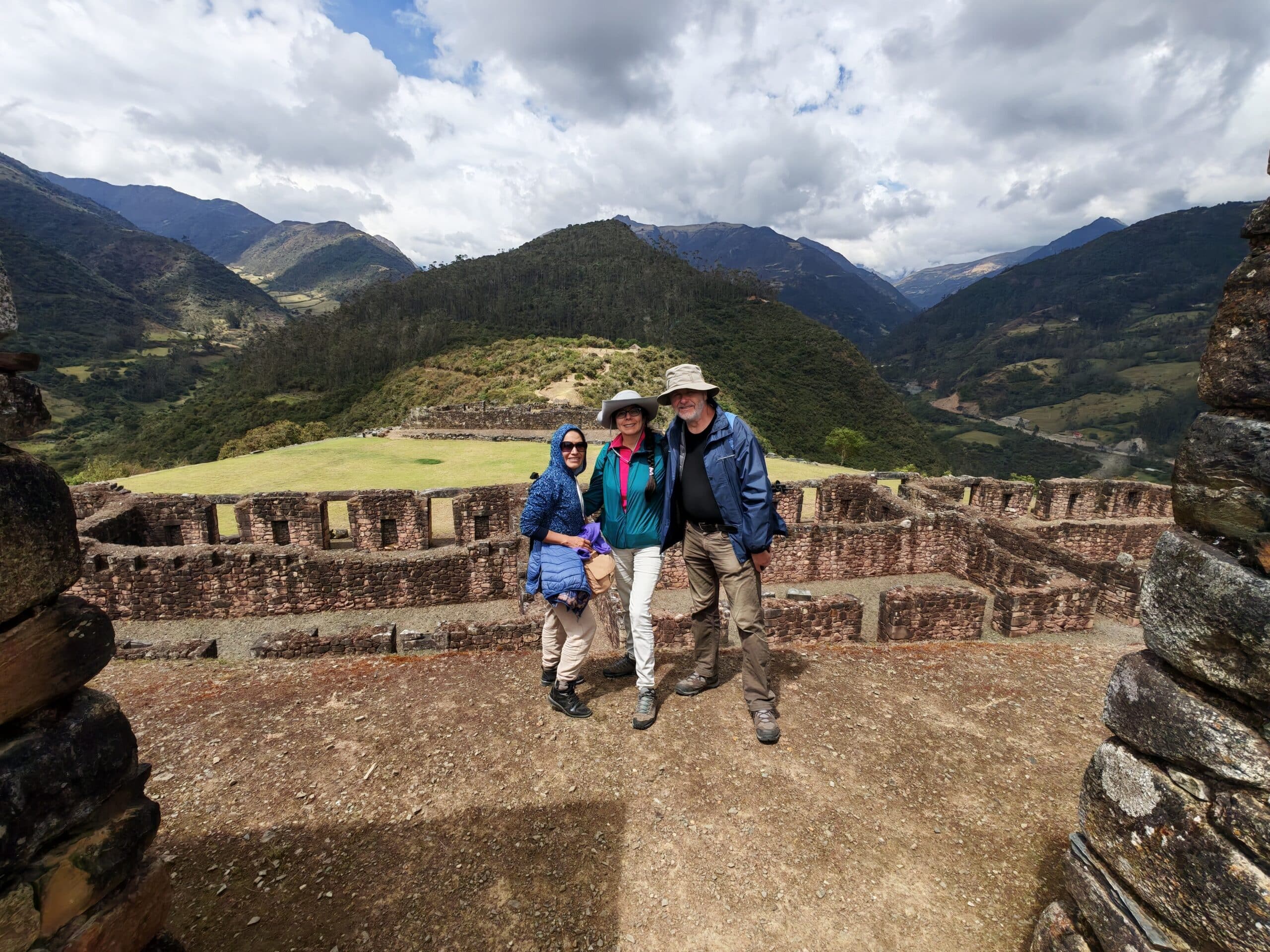
For historically minded travelers who have already done the classic Salkantay to Machu Picchu route, we also offer the Salkantay Trek to Vilcabamba 6 days, which follows the Salkantay route into the remote Vilcabamba range — the last stronghold of the Inca empire after the Spanish conquest — visiting the ruins of Vitkus and the sacred White Rock of Chuquipalta.
Salkantay Trek vs Inca Trail: Side-by-Side Summary
| Salkantay Trek | Inca Trail | |
|---|---|---|
| Duration | 4–5 days | 4 days |
| Permit required | No | Yes — book 6–8 months ahead |
| Cost per person | From $180–$530 USD | From $700–$1,200 USD |
| Maximum altitude | 4,638 m (Salkantay Pass) | 4,215 m (Dead Woman’s Pass) |
| Landscape diversity | Very high | Moderate |
| Inca sites on route | Llactapata | Runkurakay, Sayacmarca, Wiñay Wayna |
| Accommodation | Private rooms with hot showers | Tents at campsites |
| Crowds | Low to moderate | Moderate to high |
| Ends at Machu Picchu | Yes | Yes |
| Available year-round | Yes | No (closed in February) |
Which Trek is Right for You?
Choose the Salkantay Trek if:
- You are booking your trip within 3 to 4 months of departure and Inca Trail permits are no longer available
- You want more diverse landscapes including glaciers, cloud forest and jungle valley in a single route
- You prefer private hostel accommodation with hot showers over camping
- You are looking for better value without compromising on the final destination
- You want the flexibility to choose between a guided or independent format
Choose the Inca Trail if:
- You have booked your trip 6 to 8 months in advance and permits are available
- You are primarily motivated by the historical Inca sites along the route itself
- You want to enter Machu Picchu through the Sun Gate — the traditional Inca approach — on the morning of Day 4
Choose Choquequirao if:
- You have 6 to 8 days available and want the most exclusive trekking experience in Peru
- You have already done the Salkantay Trek to Machu Picchu and want a completely different destination
- Solitude and genuine remoteness matter more to you than the iconic status of the destination
Why Trek with Salkantay Hostel Treks?
Salkantay Hostel Treks is a local family-run company founded in 2015 by Manuel Holgado Espinoza, who lives on the Salkantay trail in the Santa Teresa district. We are not a large tour operator subcontracting services to third parties. We own and operate our hostels at Soraypampa, Chaullay and Lucmabamba — the three main overnight stops on the Salkantay route. Our guides are local experts who have walked these trails hundreds of times.
When you trek with us, your accommodation, your meals and your on-route support are all managed directly by our team. We support more than 10 local families living along the Salkantay and Choquequirao routes, directly contributing to their economic and social development.
Browse our full range of Salkantay Treks and Choquequirao Treks or contact our team directly via WhatsApp at +51 954739319 to discuss which route is right for your trip.
Frequently Asked Questions
Is the Salkantay Trek harder than the Inca Trail?
The Salkantay Trek reaches a higher maximum altitude — 4,638 meters at Salkantay Pass compared to 4,215 meters at Dead Woman’s Pass on the Inca Trail. Both routes require similar overall fitness levels and acclimatization in Cusco before departure. Most trekkers with basic fitness and 2 days of altitude acclimatization complete both routes without major difficulty.
Can I do the Salkantay Trek without a guide?
Yes. Our 4-day independent Salkantay Trek is designed for experienced trekkers who want to complete the route self-guided. We provide detailed trail notes, GPS waypoints and pre-departure briefing. Our hostel staff at Soraypampa, Chaullay and Lucmabamba are available along the route for support.
Can I do the Inca Trail last minute?
In practice, very rarely. Permits for the Classic Inca Trail sell out 6 to 8 months in advance during peak season. If you are planning your trip with less lead time than that, the Salkantay Trek is the most reliable and equally rewarding alternative.
Does the Salkantay Trek end at Machu Picchu?
Yes. All our guided Salkantay Trek packages — the 5-day guided tour and the expert Salkantay Trek and Machu Picchu — end with a fully guided visit to Machu Picchu, including the entrance ticket and return transport to Cusco.
What is the best alternative to the Inca Trail?
The Salkantay Trek is universally considered the best alternative to the Inca Trail. It reaches a higher altitude, covers more diverse landscapes, requires no advance permit, offers better value and ends at the same destination. For travelers with more time, the Salkantay Trek to Choquequirao offers an even more exclusive experience at one of Peru’s least visited Inca sites.
Categories
Recommended Tours
Contact information
+51 954739319 +51 954739319 salkantayhostel@gmail.com Personalized attention in English and Spanish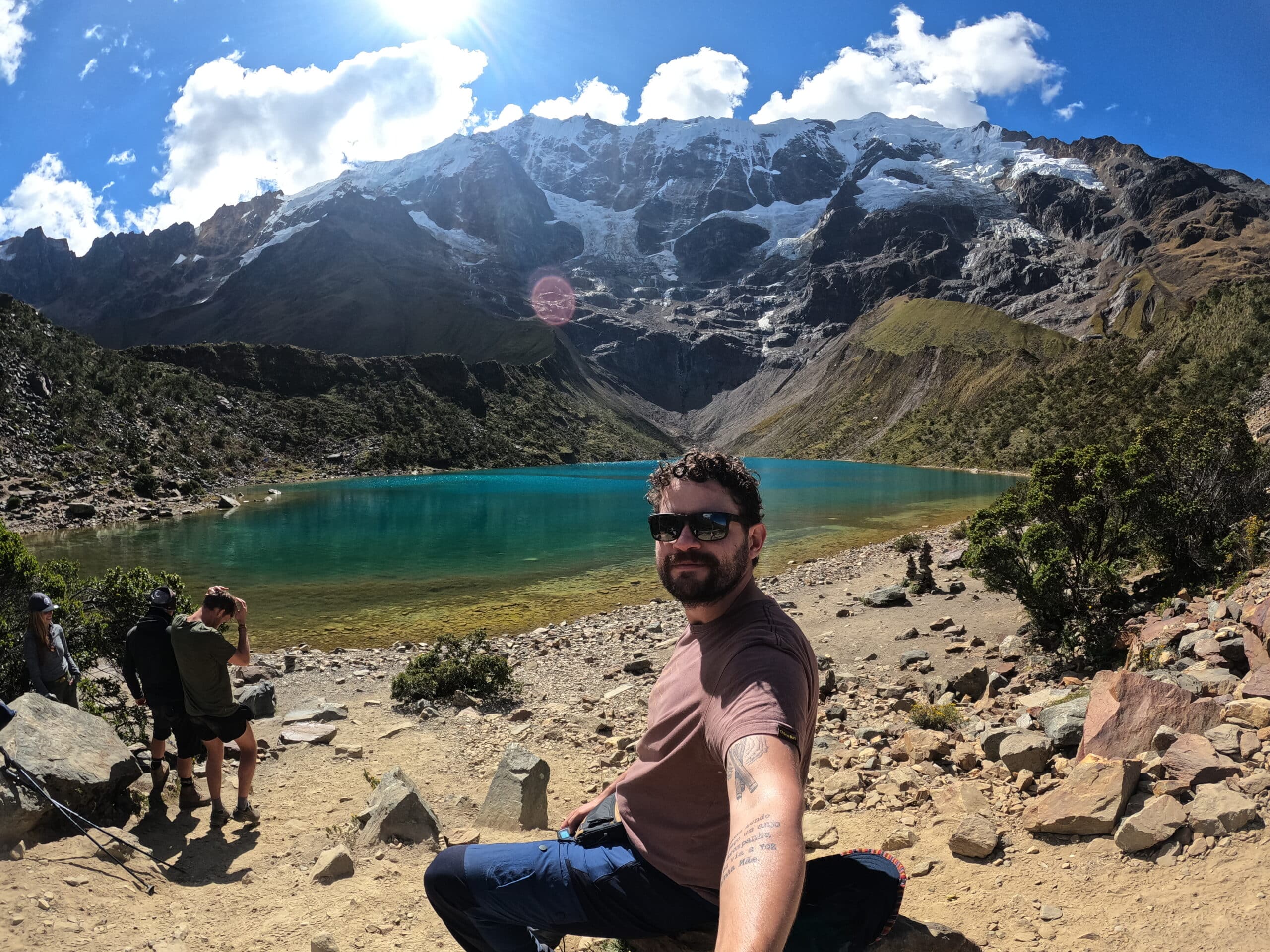 Travel with experts!